Prenatal Massage: What Is Safe, and What Helps Most

Pregnancy massage is not a lighter version of a regular massage. It is a different setup, a different sequence and a different set of goals, and when it is done properly it is one of the most relieving hours in a hard trimester.
Positioning
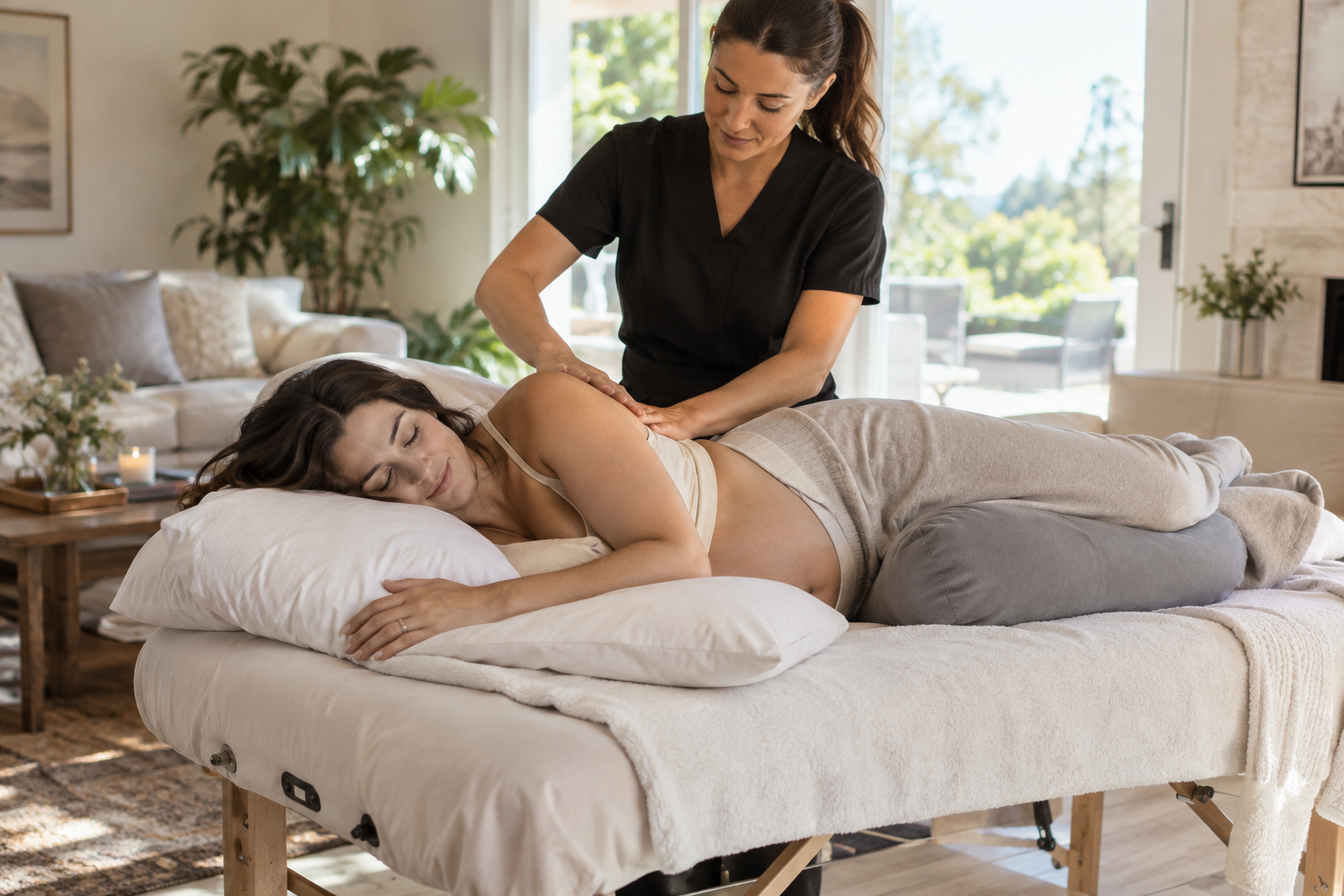
You lie on your side, supported by bolsters under the top knee, the belly and the head. No cut out tables, no lying face down. Side lying keeps pressure off the vena cava, opens the low back, and lets me reach the hip and glute muscles that carry most of the load as your center of gravity shifts.
Timing across the trimesters
- First trimester: fine for most people, though many prefer to wait until nausea settles
- Second trimester: usually the most comfortable and the most productive
- Third trimester: the highest relief per session, especially for hips, low back and ankle swelling
What responds best
Low back and sacrum tension, hip and glute tightness, upper back strain from changing posture, and fluid in the lower legs. Gentle drainage on the ankles and calves at the end of a session is often the part clients talk about afterward.
“The goal is not to fix your pregnancy. It is to give your body an hour where it does not have to hold everything.”
When to check with your provider first
High blood pressure, preeclampsia, a history of preterm labor, placenta issues, or any bleeding means a call to your OB or midwife before booking. Bring their guidance and we work within it. I would rather adjust the plan than guess.
One more practical note. Eat something light beforehand, use the bathroom right before we start, and expect to move slowly getting off the table. Nobody rushes here.

Written by
Hannah
Founder of Serenity Garden Massage and Wellness and a certified massage therapist specialising in manual deep tissue and therapeutic massage in Clovis.
Meet Hannah